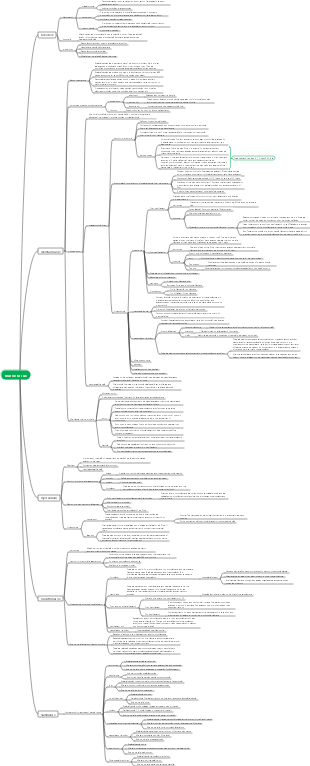
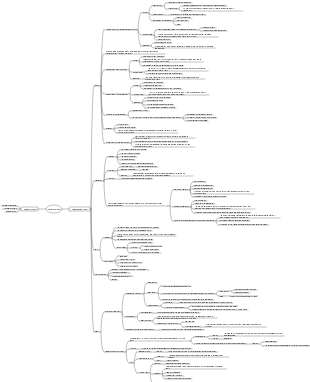
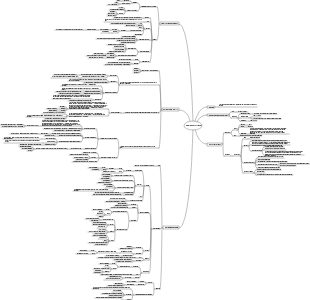
MindMap Gallery Mind map of short answer questions on histoembryology
Short-answer questions can be asked on histology and embryology, which are used for medical students' daily study and final review, including connective tissue, epithelial tissue, blood, circulatory system, etc.
Edited at 2023-11-09 11:58:16This is a mind map about bacteria, and its main contents include: overview, morphology, types, structure, reproduction, distribution, application, and expansion. The summary is comprehensive and meticulous, suitable as review materials.

This is a mind map about plant asexual reproduction, and its main contents include: concept, spore reproduction, vegetative reproduction, tissue culture, and buds. The summary is comprehensive and meticulous, suitable as review materials.
This is a mind map about the reproductive development of animals, and its main contents include: insects, frogs, birds, sexual reproduction, and asexual reproduction. The summary is comprehensive and meticulous, suitable as review materials.
This is a mind map about bacteria, and its main contents include: overview, morphology, types, structure, reproduction, distribution, application, and expansion. The summary is comprehensive and meticulous, suitable as review materials.
This is a mind map about plant asexual reproduction, and its main contents include: concept, spore reproduction, vegetative reproduction, tissue culture, and buds. The summary is comprehensive and meticulous, suitable as review materials.
This is a mind map about the reproductive development of animals, and its main contents include: insects, frogs, birds, sexual reproduction, and asexual reproduction. The summary is comprehensive and meticulous, suitable as review materials.
short answer questions
circulatory system
Summarize the structure of arterial walls and the structure of heart walls
1. Arterial wall structure: Arteries are divided into four types: large arteries, medium arteries, small arteries, and arterioles.
1. Aorta: The media of aorta contains multiple layers of elastic membrane and a large number of elastic fibers, while there are fewer smooth muscle fibers. It is also called elastic artery. ① Intima: It is composed of endothelium and subendothelial layer. There is no obvious boundary between intima and media. W-P bodies of endothelial cells are particularly abundant; ② Media: the thickest, containing 40-70 layers of elastic membrane arranged in concentric circles; ③ Adventitia: Thin, composed of loose connective tissue, external elastic membrane is not obvious
2. Medium artery: The smooth muscle fibers in the media of the vessel wall are quite abundant, so it is also called muscular artery. ① Intima: The subendothelial layer is thin, and there are 1-2 layers of obvious internal elastic membrane at the junction of the tunica media and the tunica media. The boundary between the intima and media is obvious; ② Media: thicker, composed of 10-40 layers of circular smooth muscle fibers; ③Adventitial membrane: The thickness is close to that of the media, and it is composed of loose connective tissue.
3. Small arteries, with diameters generally between 0.3-1mm, are similar in structure to medium arteries, but each layer is thinner, and generally the internal elastic lamina is obvious. The media contains 3-9 layers of circular smooth muscle fibers, and is also a muscular artery. Usually no external elastic membrane
4. The diameter of arterioles is generally less than 0.3mm, and each layer is thin. There is no internal and external elastic membrane, and the media contains 1-2 layers of smooth muscle fibers.
2. Heart wall structure The heart wall is divided into three layers: endocardium, myocardium, and epicardium from the inside to the outside.
1. Endocardium: It is composed of endothelium and subendothelial layer. The subendothelial layer can be divided into inner and outer layers. The inner layer is thin and dense connective tissue; the outer layer is close to the myocardium and is called the subendocardium, which is loose connective tissue. The subendocardium of the ventricle contains the branches of the cardiac conduction system, the Purkinje fibers.
2. Myocardial membrane: mainly composed of myocardial fibers. Myocardial fiber bundles are arranged in a spiral shape and can be divided into three layers: inner longitudinal, middle circular, and outer oblique layers. There are also Purkinje fibers in the ventricular muscle; the myocardium is thinner in the atria and thickest in the left ventricle. Between the atrium and ventricular muscles, dense connective tissue forms a tough scaffolding structure that supports the heart's skeleton. The atrial muscle and the ventricular muscle are respectively attached to the cardiac skeleton, and the two parts of the myocardium are not continuous.
3. Epicardium: the visceral layer of the pericardium, which is the serosa.
4. Heart valve: It is a thin sheet-like structure formed by the endocardium protruding into the cavity. The surface of the heart valve is endothelium and the interior is dense connective tissue
Cell composition, distribution and function in the cardiac conduction system
Structural and functional characteristics of three types of capillaries
muscle tissue
Describe the structural differences between skeletal muscle and cardiac muscle under light microscopy and electron microscopy
Similarities:
(1) Under light microscope: The cytoplasm contains myofibrils, and the cytoplasm is eosinophilic; there are alternating light and dark striations.
(2) Under the electron microscope: The cytoplasm contains myofibrils, transverse tubules, and sarcoplasmic reticulum. Myofibrils are composed of thick and thin myofilaments and form sarcomeres.
the difference:
(1) Under a light microscope: ① The skeletal muscle fibers are long cylindrical, generally without branches, while the cardiac muscle fibers are short cylindrical, branched, and interconnected into a network; ② The skeletal muscle fibers are multi-nucleated, and the nuclei are flat and oval, located under the sarcolemma. Myocardial fibers have one nucleus, rarely two nuclei, and the nucleus is oval and located in the center of the cell. ③ A well-developed intercalary disk is formed at the junction of myocardial fiber and skeletal muscle fiber has no intercalary disk.
(2) Under the electron microscope: ① Myofibrils: skeletal muscle fibers are uniform in thickness and have clear boundaries, while cardiac muscle fibers vary in thickness and have unclear boundaries; ② Transverse tubules: myocardial fibers are thicker; located at the Z line level, and skeletal muscle fibers are located at the junction of light and dark bands ; ③ Sarcoplasmic reticulum: The skeletal muscle fibers are relatively developed and form triplets with the transverse tubules. The myocardial fibers are sparse, the terminal pools are few and small, and most form dyads with the transverse tubules.
blood
Briefly describe the classification and structural characteristics of white blood cells.
White blood cells are divided into granulocytes and agranulocytes. Granulocytes are divided into neutrophils, basophils, and eosinophils. Agranulocytes are divided into monocytes and lymphocytes.
(1) Neutrophils: round; the nucleus is divided into rod-shaped nuclei and lobulated nuclei. The more lobed the cells, the more senescent they are; the cytoplasm contains small light purple azurophilic granules and light red special granules. . It has strong chemotactic and phagocytic functions, mainly engulfing bacteria.
(2) Basophils: round, with lobulated nuclei, either S-shaped or irregular, with basophilic granules of varying sizes and uneven distribution in the cytoplasm, stained purple-blue, which can be Nuclear cover. The granules contain histamine, heparin, etc., which can participate in allergic reactions.
(3) Eosinophils: round and larger than neutrophils; the nuclei are mostly 2-lobed and arranged in an "eight" shape; the cytoplasm is filled with thick, bright red eosinophilic granules, and the granules contain histamine and aromatic enzymes. Histamine and aryl sulfatase can inactivate histamine and leukotriene respectively to reduce allergic reactions, and cationic protein can kill parasites. Therefore, when suffering from allergic diseases or parasitic diseases, eosinophils increase in the blood.
(4) Mononuclear cells: the largest in size, round, with kidney-shaped or horseshoe-shaped nuclei, weakly basophilic cytoplasm, and containing small azurophilic granules.
(5) Lymphocytes: There are only small and medium lymphocytes in the blood, and there are also large lymphocytes in lymphoid tissues; they are round, with round nuclei and often have shallow concavities on one side; the cytoplasm is basophilic.
Structural characteristics, normal values and functions of reticulocytes
Reticulocytes are slightly larger than mature red blood cells. Some ribosomes remain in the cytoplasm, which are stained by coal tar blue and appear in the shape of a fine black mesh.
Small in number, accounting for 0.5 to 1.5% of the total number of red blood cells
It is an indicator of bone marrow hematopoietic function...
epithelial tissue
Briefly describe the structural characteristics and main functions of epithelial tissue
structure
Many cells, tightly arranged, little extracellular matrix
Obvious polarity, can be divided into free surface, side surface and basal surface
Avascular, rich in nerve endings
Function
protect, absorb, secrete and excrete
Compare the similarities and differences between stratified squamous epithelium and transitional epithelium
same
stratified covering epithelium
different
Superficial cells: stratified squamous epithelium is composed of several layers of flat cells, and transitional epithelium is composed of large cuboidal cover cells containing binucleates.
Keratinization: Stratified squamous epithelium will form but transitional epithelium will not.
Changes: The number and shape of epithelial cells can change with the contraction and expansion of the organ. Stratified squamous epithelium does not.
Connected to deep connective tissue: stratified squamous epithelium is uneven, while metamorphic epithelium is flatter
Distribution: Stratified squamous epithelium is located in the oral cavity, esophagus, and vagina, and transitional epithelium is distributed in the lumen of the urinary tract.
Similarities and Differences between Microvilli and Cilia
same
Specialized structure of the free surface of the epithelium
different
Composition: microvilli are microfilaments, cilia are microtubules
Function: Microvilli can expand the cell surface area, participate in absorption function, and the cilia swing in a direction to expel secretions and bacteria.
Briefly describe the structural characteristics of serous cells and mucus cells
serous cells
LM: Cone-shaped, round nucleus near the base, strong basophilic cytoplasm at the base, strong eosinophilic cytoplasm containing zymogen granules at the top
EM: rough endoplasmic reticulum, Golgi complex, secretory granules
mucus cells
LM: cone-shaped, with an oval nucleus and a base, and most of the cytoplasm is uncolored and appears to be foam or vacuole.
EM: rough endoplasmic reticulum, Golgi complex, clay granules
Classification and general structure of exocrine glands in the digestive system
structure
secretory department
tubular, vesicular, tubular vesicular
catheter
single gland
complex glands
Single tubular gland. . . .
Classification
serous acini
mucinous acini
mixed acini
serous gonads
mucous gonads
mixed gonads
half moon
myoepithelial cells
connective tissue
The composition of loose connective tissue
Loose connective tissue is composed of cells and extracellular matrix.
(1) Cells: There are seven types of cells: fibroblasts, macrophages, plasma cells, mast cells, adipocytes, leukocytes and undifferentiated mesenchymal cells.
1. Fibroblasts: under light microscope: the cells are large and have multiple processes; the nuclei are large and oval; the cytoplasm is weakly basophilic. Under the electron microscope: The cytoplasm contains abundant rough endoplasmic reticulum and Golgi complex. Function: Synthetic fibers and matrix.
2. Macrophages: Under light microscope: When the cells are active, they have pseudopods and irregular shapes. The nuclei are small, round or kidney-shaped, and the cytoplasm is eosinophilic. Under the electron microscope: there are a large number of lysosomes in the cytoplasm. Function: phagocytosis, antigen presentation, secretion of various biologically active substances.
3. Plasma cells: under light microscope: round or oval, with round or oval nuclei on one side, and basophilic cytoplasm. Under the electron microscope: The cytoplasm contains abundant rough endoplasmic reticulum and a well-developed Golgi complex. Function: Synthesize and secrete antibodies.
4. Mast cells: under a light microscope: the cells are large, round or oval; the nucleus is small, round, and centered, and the cytoplasm is filled with thick basophilic secretory granules. Function: Involved in allergic reactions.
5. Adipocytes: The cell body is large, the cytoplasm contains a large lipid droplet, and the nucleus and the rest of the cytoplasm are squeezed to the periphery of the cell.
6. Mesenchymal cells are stem cells within adult connective tissue.
7. White blood cells in blood often penetrate capillaries and venules with deformation motion.
(2) Extracellular matrix: including fibers, matrix and tissue fluid.
1. Fiber: divided into three types: collagen fiber, elastic fiber and reticular fiber.
(1) Collagen fibers: composed of type I collagen, eosinophilic under a light microscope, and interwoven into a network.
(2) Elastic fibers: composed of elastin, thin, weakly eosinophilic, and interwoven into a network.
(3) Reticular fibers: composed of type III collagen.
2. Matrix: It is an amorphous gel composed of biological macromolecules. It is colorless and transparent, with a certain degree of viscosity. The pores are filled with tissue fluid and filled between connective tissue cells and fibers. Its biological macromolecules mainly include protein polymers. sugar and fibronectin
How mast cells are involved in allergic reactions
What does it contain
When the body is exposed to the antigen for the second time, the mast cells are stimulated and release large amounts of granule contents through exocytosis.
What changes occur to the substances contained in
The role of cells involved in pollen-induced allergic reactions
Cells involved in allergic reactions are plasma cells, mast cells, basophils and eosinophils
Plasma cells produce the antibody lgE after being stimulated. Mast cells and basophils have lgE receptors. When the two combine, the body is sensitized to allergens.
When exposed to the antigen for the second time, mast cells and basophils are stimulated to undergo a degranulation reaction, releasing histamine, leukotrienes and other substances
Both will also simultaneously release eosinophil chemokines, induce eosinophils to migrate to allergic sites, release histamine and arylsulfatase, decompose histamine and inactivate leukotrienes, thereby inhibiting allergic reactions.
Describe the response of macrophages and fibroblasts in connective tissue during local trauma and inflammation
Macrophages undergo chemotaxis and move to areas with high concentrations of these substances under the stimulation of bacteria and inflammation, digest and decompose them through phagocytosis, and present the antigenic substances to T cells.
Fibroblasts transform into fibroblasts, produce a large amount of extracellular matrix, and participate in repair
cartilage and bone
Structural composition and characteristics of long bones
Long bones are composed of dense bone, cancellous bone, articular cartilage, periosteum, bone marrow, blood vessels and nerves.
(1) Compact bone: distributed on the outer surface of the diaphysis and epiphysis, the bone plates are closely combined, and can be divided into three types: ring bone plate, bone unit and interosseous plate
① Ring bone plate: It is divided into inner ring bone plate and outer ring bone plate. The inner ring bone plate is thinner than the outer ring bone plate and not as smooth as the outer ring bone plate;
② Bone unit: Located between the inner and outer ring bone plates, it is composed of multiple layers of Haversian bone plates arranged in concentric circles around the central canal, through which nerves and small blood vessels pass.
③Interosseous plate: Located between bone units or between bone units and inner and outer ring bone plates, the size and shape are irregular.
(2) Cancellous bone: Distributed on the inner surface of the backbone and the middle of the epiphysis, it is composed of a large number of needle-like or flaky bone trabeculae. A porous grid structure can be seen, and the middle is filled with bone marrow.
(3) Periosteum: It is divided into endosteum and episteum. The episteum is a dense connective tissue with thick collagen fiber bundles interwoven into a network. The endosteum is very thin. The main function of the periosteum is to nourish bone tissue and provide stem cells for bone growth and repair.
Structural similarities and differences between the three types of cartilage
same
are composed of cartilage tissue and perichondrium
Chondrocytes can proliferate and divide to form homogeneous cell populations.
Cartilage matrix includes fibers and matrix
There are no blood vessels in the tissue
different