 Wondershare EdrawMind
MindMap Gallery Reading Notes Adler
- 37
- 1
Reading Notes Adler
"The courage to be hated" is not to attract the negative energy that is hated, but if this is my life that wants to shine with the most beautiful brilliance, then even if there is a possibility of being hated, I have to walk there with my hands and feet. " "Because I have the courage to be hated, I have the possibility of real happiness." Do you often feel bored by the tedious life? Are you always tired of complex relationships? Do you think the meaning of life is becoming increasingly blurred and difficult to see? How can we use our own hands to achieve true happiness in the complicated daily trivial and complex interpersonal relationships? The answer to all this is in this book "The Courage of Being Hate"! ★Japan Amazon's 2014 annual sales champion, ranking first in sales for 300 consecutive days! ★Cai Kangyong, Zhang Defen, Chen Wenqian, Zeng Baoyi, recommended by courage! ★Zhang Peichao, Hu Shenzhi, and motivation in Hangzhou. Recommended preface! ★Adler's thoughts have the power to change a person's life. All that remains is whether you can muster up the "courage" to take a step
Edited at 2025-02-27 13:06:07
- Rumi 10 spiritual high-dimensional awakenings
Rumi: 10 dimensions of spiritual awakening. When you stop looking for yourself, you will find the entire universe because what you are looking for is also looking for you. Anything you do persevere every day can open a door to the depths of your spirit. In silence, I slipped into the secret realm, and I enjoyed everything to observe the magic around me, and didn't make any noise. Why do you like to crawl when you are born with wings? The soul has its own ears and can hear things that the mind cannot understand. Seek inward for the answer to everything, everything in the universe is in you. Lovers do not end up meeting somewhere, and there is no parting in this world. A wound is where light enters your heart.
- Pathophysiology - Heart failure
Chronic heart failure is not just a problem of the speed of heart rate! It is caused by the decrease in myocardial contraction and diastolic function, which leads to insufficient cardiac output, which in turn causes congestion in the pulmonary circulation and congestion in the systemic circulation. From causes, inducement to compensation mechanisms, the pathophysiological processes of heart failure are complex and diverse. By controlling edema, reducing the heart's front and afterload, improving cardiac comfort function, and preventing and treating basic causes, we can effectively respond to this challenge. Only by understanding the mechanisms and clinical manifestations of heart failure and mastering prevention and treatment strategies can we better protect heart health.
- Pathophysiology - ischemia - reperfusion injury
Ischemia-reperfusion injury is a phenomenon that cellular function and metabolic disorders and structural damage will worsen after organs or tissues restore blood supply. Its main mechanisms include increased free radical generation, calcium overload, and the role of microvascular and leukocytes. The heart and brain are common damaged organs, manifested as changes in myocardial metabolism and ultrastructural changes, decreased cardiac function, etc. Prevention and control measures include removing free radicals, reducing calcium overload, improving metabolism and controlling reperfusion conditions, such as low sodium, low temperature, low pressure, etc. Understanding these mechanisms can help develop effective treatment options and alleviate ischemic injury.
Reading Notes Adler
- Rumi 10 spiritual high-dimensional awakenings
Rumi: 10 dimensions of spiritual awakening. When you stop looking for yourself, you will find the entire universe because what you are looking for is also looking for you. Anything you do persevere every day can open a door to the depths of your spirit. In silence, I slipped into the secret realm, and I enjoyed everything to observe the magic around me, and didn't make any noise. Why do you like to crawl when you are born with wings? The soul has its own ears and can hear things that the mind cannot understand. Seek inward for the answer to everything, everything in the universe is in you. Lovers do not end up meeting somewhere, and there is no parting in this world. A wound is where light enters your heart.
- Pathophysiology - Heart failure
Chronic heart failure is not just a problem of the speed of heart rate! It is caused by the decrease in myocardial contraction and diastolic function, which leads to insufficient cardiac output, which in turn causes congestion in the pulmonary circulation and congestion in the systemic circulation. From causes, inducement to compensation mechanisms, the pathophysiological processes of heart failure are complex and diverse. By controlling edema, reducing the heart's front and afterload, improving cardiac comfort function, and preventing and treating basic causes, we can effectively respond to this challenge. Only by understanding the mechanisms and clinical manifestations of heart failure and mastering prevention and treatment strategies can we better protect heart health.
- Pathophysiology - ischemia - reperfusion injury
Ischemia-reperfusion injury is a phenomenon that cellular function and metabolic disorders and structural damage will worsen after organs or tissues restore blood supply. Its main mechanisms include increased free radical generation, calcium overload, and the role of microvascular and leukocytes. The heart and brain are common damaged organs, manifested as changes in myocardial metabolism and ultrastructural changes, decreased cardiac function, etc. Prevention and control measures include removing free radicals, reducing calcium overload, improving metabolism and controlling reperfusion conditions, such as low sodium, low temperature, low pressure, etc. Understanding these mechanisms can help develop effective treatment options and alleviate ischemic injury.
- Recommended to you
- Outline
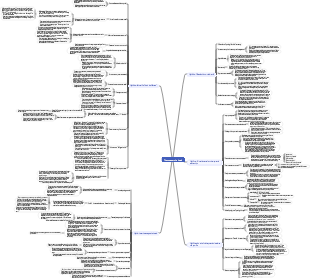

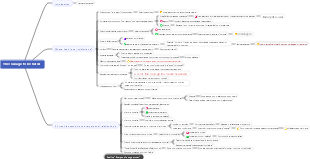
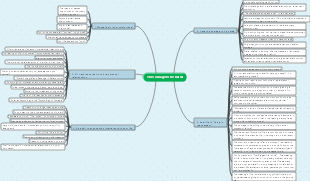
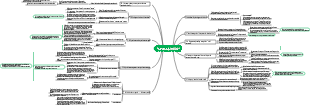
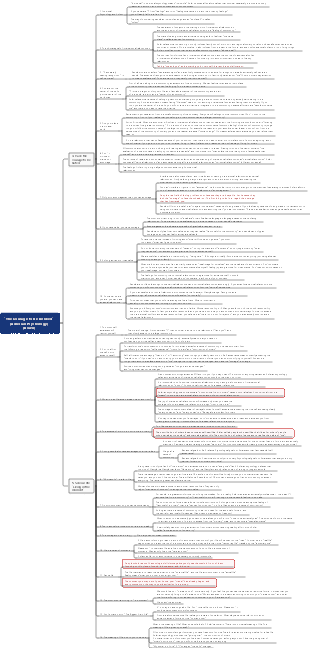
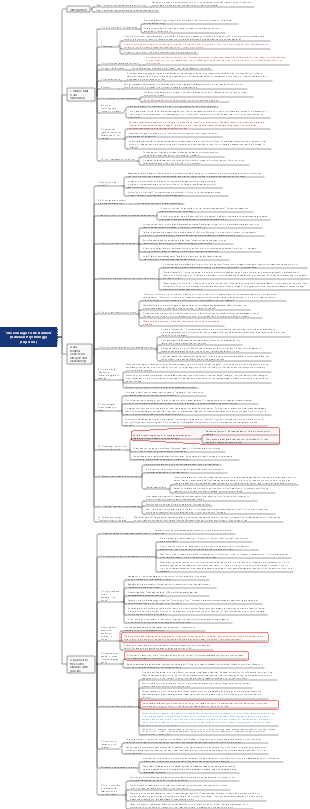
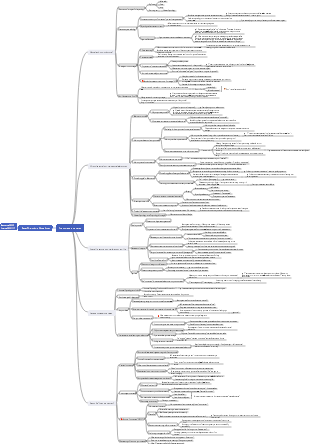
Reading Notes on "The Courage of Being Hate"
Outline of this book
This book gradually penetrates Adler's philosophy into discourse in the form of dialogue between "youth" and "philosopher". This outline mainly divides the content of the book into ten key points based on the dialogue content for easy learning and sorting.
saying
Adler's famous quote
"In our culture, if you want to ask who is the most powerful, the answer may be the baby. Infants are always in a dominant rather than dominant position." Infants dominate adults through their weak characteristics. Moreover, babies are not controlled by anyone because they are weak.
“In our culture, weakness is actually very powerful and privileged.”
“If you want to live together in harmony, you must treat the other person as an equal.”
"Children who have not learned to face difficulties will eventually want to escape from all difficulties."
"Someone has to start. Even if others don't cooperate, it has nothing to do with you." This is my opinion: you should start. There is no need to consider whether others cooperate.
"No matter what happened in your previous life, it has no impact on how you spend your future life." What determines your life is yourself who lives in "this moment".
“What matters is not what is given, but how to use what is given.”
What determines ourselves is not "experience itself" but "the meaning given to experience"
Adler said the following passage when denying the theory of psychological trauma: "Any experience itself is not the cause of success or failure. We are not suffering because of the stimulation in our own experience - the so-called psychological trauma -. In fact, we will find factors that suit our own purpose from our experience. What determines ourselves is not the past experience, but the meaning we give to our experience."
What matters is not the past, but how you view the past, and our views on the past can be changed.
Other Quotes
There is a passage in Judaism: "If there are 10 people, one of them will definitely criticize you no matter what happens. He hates you, and you don't like him. Moreover, two of the 10 people will be good friends who accept everything with you. The remaining seven people are neither."
This is the widely circulated "Nebull's prayer": "God, please give me peace and accept what I cannot change: give me courage to change what I can change; give me wisdom to distinguish the difference between the two.
When Emperor Alexander saw that the knot was very strong, he immediately took out his dagger and broke it with one knife. At that time, he continued: "Fate is not determined by legend but by its own sword. I do not need the power of legend but by its own sword to create destiny.
There is a saying in Judaism: "If you don't live your own life for yourself, who else will live for yourself?
As Zen and Motorcycle Repair Art says, when you are rushing toward the future, it means you don’t like the present.
Author summary
It’s not anyone else who determines your lifestyle (life status), but you.
Now, the world in your eyes appears in complex and weird chaos. But if you change yourself, the world returns to its simple posture. Because the problem is not how the world is, but how you are.
The world is simple, and life is simple.
1. Various judgments
Teleology
What is "teleology"?
Your friends first have the purpose of "not going out", and then they will create emotions such as anxiety or fear to achieve this goal.
He was dissatisfied and not happy either. However, he did take action according to the "purpose".
It's not just him, we are all living for some "purpose". This is teleology.
The so-called anger is actually just a "mean" that can be released or restrained
You first have the purpose of getting angry. In other words, you want to shock the waiter who made mistakes by getting furious, and then make him listen carefully to himself. As a corresponding means, you fabricate the feeling of anger.
You feel that reasoning is too troublesome, so you want to make the other party who is not resistant surrender in a faster way. As a corresponding means, you use the feeling of "anger".
"Tivisionism" was not a claim that suddenly appeared in Adler's time, it had appeared in Plato or Aristotle's philosophy.
example
A socially phobic person does not go out due to various physical conditions
In fact, he created various physical conditions because he didn't want to go out to face the purpose of interpersonal relationships.
Moreover, as long as he doesn't go out, he doesn't have to face the possibility of "maybe he overcomes social terror and still accomplishes nothing", and lives in the fantasy of thinking that as long as he is willing to overcome social terror, he can do big things.
My parents will take care of him carefully.
A girl with blushing dares not confess
In fact, she was escaping the possibility that she might fail to confess her love and created an excuse for blushing.
The young man reads a book in a coffee shop, and his clothes are soaked by the waiter, so he angrily scolds the clerk
Youth thinks it is the theory of cause, and philosophers think it is the youth who have the purpose of blaming the other party first, which will arouse anger.
You feel that reasoning is too troublesome, so you want to make the other party who is not resistant surrender in a faster way. As a corresponding means, you use the feeling of "anger".
You first have the purpose of getting angry. In other words, you want to shock the waiter who made mistakes by getting furious, and then make him listen carefully to himself. As a corresponding means, you fabricate the feeling of anger.
There is a story about one day when the mother and daughter were arguing loudly.
At this moment, the phone rang. "Hey hey?" The mother, who hurriedly picked up the microphone, still had a hint of anger in her voice. However, the person who called was the head teacher of his daughter's school. After realizing this, my mother's tone immediately became polite. In this way, the mother talked in a polite tone for about 5 minutes before hanging up the phone, then changed color again and began to scold her daughter.
The so-called anger is actually just a "mean" that can be released or restrained.
It can be cleverly put away the phone the moment it answers, or it can be released again after hanging up the phone.
This mother was not furious because she was furious. She just used anger to shock her daughter with loud voices and make her listen to her.
Determinism
"There is a reason before everything turns out." In short, you think that the current me (the result) is determined by the past (the reason).
If you focus on the causes of the past and try to explain things by relying solely on the causes, you will fall into "determinism".
In other words, we will eventually come to the conclusion that our present and even the end are all determined by things from the past and cannot be changed at all.
Freud's theory of psychological trauma is indeed very interesting. He believes that the harm (psychological trauma) of the mind in the past is the culprit that causes the current misfortune. When we regard human beings as a large-scale drama, its simple logic of causality and dramatic development will naturally exude a fascinating charm.
Cause theory
A general life consultant or psychiatrist will simply point out that "the reason you suffer is because of the past" and then simply comfort "so it's not your fault." The so-called theory of psychological trauma is a typical example of cause theory.
No matter what happened in the past, the current state depends on the meaning you give to the existing event.
It is impossible for us to ride the time machine back in the past, nor can we let the hour hand turn. If you become a believer in the theory of cause, you will never be able to obtain happiness under the constraints of the past.
People are not influenced by the reasons of the past, but move towards their goals. This is the philosopher's opinion
It does not mean that major disasters or abuse in childhood have no impact on personality formation. On the contrary, the impact will be great. But the key is that experience itself does not determine anything.
"Holoom"
The same is true for reason and emotion, consciousness and unconsciousness. Generally speaking, calm people will not be furious by being driven by impulsiveness. We are not influenced by the independent existence of emotion, but a unified whole.
Considering people as an inseparable existence and as a "whole"
In English, individual psychology is called "individual psychology". Moreover, the word "individual" here has the meaning of "individual" in its etymology.
Adler opposed all dualistic values that separate the mind and body, reason and emotion, and consciousness and unconsciousness.
2. Your misfortune is all your "choose"
Good and Evil
There are indeed many evil behaviors. But no matter what kind of criminal is, he does not do bad things because he wants to do evil. All criminals have their own "corresponding reasons" for their crimes.
In Greek, the word “good” does not contain moral meanings, but only has the meaning of “benefits”;
On the other hand, the word "evil" also has the meaning of "no benefit".
This world is full of evil deeds such as illegal or crime. But there is no one who wants to do "evil = no good thing" in the pure sense.
For him, he also has an act of "corresponding reason", in other words, a "good" action. Of course, this does not refer to good in the moral sense, but to good in the sense of "self-interest".
Maintaining a "this self" full of shortcomings is an irreplaceable "goodness" for you, that is, "it is good."
You chose "unfortunate" at a certain stage in your life. This is neither because you were born in an unfortunate environment nor because you were trapped in an unfortunate situation, but because you think "unfortunate" is a kind of "goodness" to yourself.
How to achieve this goal? The answer is very simple. Just become someone who only looks at your own shortcomings, hates yourself extremely, and tries not to get involved in interpersonal relationships.
In this way, as long as you hide in your own shell, you can not be associated with anyone, and if you are rejected by others, you can use this as a reason to comfort yourself. I will think to myself: Because I have such a shortcoming, I will be rejected, and as long as I don’t have this shortcoming, it will be very likable.
Lifestyle is the result of your own initiative
If the lifestyle is not given innately, but the result of your own choice, you can make a new choice by yourself.
If you keep "I am now", you can speculate based on experience on how to deal with the current situation and what the outcome will be, which can be said to be a familiar state. Even if you encounter some situations, you can find a way to deal with it.
On the other hand, if you choose a new lifestyle, you will not know what problems you will encounter with your new self, nor how you should deal with what is happening in front of you. In other words, even if people have various dissatisfactions, they still think that maintaining the status quo is easier and more at ease.
It takes a lot of "courage" to change your lifestyle. In the face of the "unsettlement" caused by changes and the "dissatisfaction" caused by constant changes, you must have chosen the latter.
Your life depends on the "now".
What should you do first now? That is to have the determination to "abandon the current lifestyle".
This simple topic is in front of you, but it keeps bringing out all kinds of "reasons that cannot be done". Don't you think this is a very painful way of life?
If you want to change your perception of the world or yourself (lifestyle), you must change the way you communicate with the world, and even change the way you behave. Please don't forget what exactly is "must change". You are still "you", just choose your lifestyle again.
Framework effect
The word personality may feel "unchangeable", but if it is a worldview, there is a possibility of change.
Use the word "lifestyle" to illustrate personality or personality
How someone sees the "world" and how he sees himself, the concept of bringing together these "ways of giving meaning" can be understood as a way of life. In a narrow sense, it can be understood as personality: in a broad sense, this word even contains someone's worldview or outlook on life.
Let's assume that a person is troubled by "my character is pessimistic", and we can try to replace his words with "I have a pessimistic" worldview. I think the problem is not in my personality, but in my worldview.
Inferiority comes from subjective fabrication
Subjective and objective
People do not live in an objective world, but in the subjective world they create. The world you see is different from the world I see, and I am afraid it is a world that cannot be shared with anyone.
How to view "this subjectivity" is all, and we cannot get rid of our subjectivity.
The inferiority complex that troubles us is not an "objective fact" but an "subjective explanation
After all, the feeling of one's own height is still a subjective "sense of inferiority" that arises from comparison with others - that is, interpersonal relationships. If there is no one who can compare, I wouldn't think I'm too short
You also have various "inferiority" and suffer deeply, right? However, that is not objectively "inferiority", but subjectively "inferiority". Even problems like height can be subjectively restored.
We cannot change objective facts, but we can change subjective interpretations arbitrarily. And, we all live in the subjective world
Inferiority and inferiority complex
Feeling inferiority complex
The first person to use the word "inferiority" in the context is Adler.
In German used by Adler, the sense of inferiority means "feeling" with less value. In other words, the sense of inferiority is a word about self-worth judgment.
It is a feeling like "I have no value or only a little value".
The value issue can ultimately be traced back to interpersonal relationships.
Value must be based on social significance
First of all, people live in this world as a powerless being. Moreover, people want to get rid of this state of powerlessness and then have universal desires. Adler called it "pursuing superiority."
Corresponding to this is inferiority complex. People are in the pursuit of superiority, which is a state of "hoping to make progress", establish certain ideals or goals and strive for them. At the same time, you will feel inferior to yourself who cannot achieve your ideals
Adler said, "Whether it is pursuing superiority or inferiority complex, it is not pathological, but a stimulus that can promote healthy and normal efforts and growth." As long as it is handled properly, inferiority complex can also become a catalyst for hard work and growth.
We should abandon our sense of inferiority complex and move forward further; be not satisfied with the status quo, continue to make progress; and be happier. If there is such a sense of inferiority complex, there will be no problem.
Here, you can simply understand it as "hoping progress" or "pursuing ideal state"
The scientific progress in human history is also the result of "pursuing superiority"
The so-called "pursuing superiority" means that oneself keeps moving forward, rather than being one step ahead of others.
The pursuit of superiority is not accomplished through competition with others.
A sound sense of inferiority complex does not come from comparison with others, but from comparison with the "ideal self".
Don't compete with anyone. Just keep moving forward
When a person wants to be himself, competition will inevitably become an obstacle.
If there is "competition" in interpersonal relationships, it is impossible for a person to get rid of the troubles brought by interpersonal relationships and it is impossible for a person to get rid of misfortune.
Suppose you have a sense of "competitiveness" about everyone around you. However, there will be winners and losers in the competition
If you realize the competition or the outcome, you will inevitably feel inferior. Because often comparing yourself with others will lead to thoughts like "better than this and lose from that", and inferiority complex or superior complex will arise with it.
Unconsciously, you will regard others and the whole world as "enemy"
In other words, you will think that everyone is an enemy that will fool, mock, attack or even frame yourself at any time and must not be taken lightly, and the world is a terrifying place.
Regarding inferiority complex, Adler pointed out that "no one can endure inferiority complex for a long time." In other words, although everyone has inferiority complex, it is so heavy that no one can endure this state.
Having a sense of inferiority is to feel that the current "I" is lacking
In this way, the problem is how to make up for the lack of
People who do not have this courage will fall into inferiority complex
Inferiority complex
The word "lower complex" originally means a complex and abnormal psychological state, which has nothing to do with inferiority complex.
Inferiority can also be an opportunity to promote efforts and progress
Inferiority complex refers to the state of using one's own inferiority complex as an excuse.
Adler used the term "external law of cause and effect" to explain it. It means: interpreting something that has no causal relationship as if it seems to be significant
Simply put, it is a fear of moving forward or not wanting to really work hard. Unwilling to sacrifice the fun you are currently enjoying in order to change yourself—such as having fun or leisure time. That is, I can't show the "courage" to change my lifestyle. Even if I am a little dissatisfied or unfree, I am still more willing to maintain the status quo
The inferiority complex sometimes develops into another special psychological state, which is the "superior complex".
Although I suffer from a strong sense of inferiority, I do not have the courage to make changes through sound means such as hard work or growth. Even so, I can't bear the inferiority complex such as "I can't do B because of A" and cannot accept the "incompetent self". In this way, people will want to make compensation in a simpler way.
Acting as if you are excellent, then immersed in a false sense of superiority.
Those who express their inferiority complex in words or attitudes and those who claim that "because of A, they cannot achieve B", imply that "as long as there is A, I will be a capable and valuable person."
I have an inferiority complex about my education and think that "I cannot succeed because of my low education." On the other hand, this means that "as long as I have a high education, I can also achieve great success."
A very common example is "powerfulness".
For example, vigorously proclaiming that one is a powerhouse—can be a team leader or a well-known person—in fact, it is actually showing that one is a special existence through this method. False reporting of resumes or excessive pursuit of famous brand clothing is also a characteristic of being powerful and having a superior complex. These situations all belong to "I" who were not excellent or special. And by combining "I" with power, "I" seems to be excellent. This is the "false sense of superiority".
Those who use the power of power to raise themselves are ultimately living in the values and life of others. This is something that must be emphasized.
People who deliberately boast about themselves actually have no confidence in themselves. Adler clearly pointed out that "if someone is proud, it must be because he has a sense of inferiority."
If you truly have confidence, you won’t be arrogant. It is precisely because of a strong sense of inferiority that I am arrogant. In fact, I want to deliberately show off my excellentness. Worrying that if you don’t do that, you won’t get recognition from all around you. This is a completely superior complex.
Finally, let’s give another complex example of boasting. This is a model that achieves an extraordinary sense of superiority by sharpening the sense of inferiority. Specifically, it means boasting about misfortune.
That is to say, those who relish and even boast about all kinds of misfortunes in their growth history. Moreover, even if others want to comfort or help them change, they will use "you can't understand my mood" to push away the helping hand.
That is, expose your inferiority complex to use it as a weapon
"Weakness has privilege"
Adler psychology calls it "the pursuit of cheap superiority."
Whether you hope to be particularly good or bad, your purpose is the same - to attract the attention of others, get out of the "ordinary" state, and become a "special existence". That's their purpose.
"Lie in Life" teaches us to escape
Adler called this situation of attempting to set up various excuses to avoid life issues "life lies."
For your current state, transfer the blame to others and avoid life issues by blaming others or the environment.
If your lifestyle is determined by others or the environment, it is possible to transfer responsibilities. However, we choose our own lifestyle, and the responsibility lies very clearly.
"Work awesome" is a lie in life
Adler psychology believes that this lifestyle is a lifestyle that lacks "harmony in life" and a lifestyle that judges the overall based on only part of things.
People with a neurotic lifestyle often use words like "everyone", "always", or "everything". "Everyone hates themselves", "It's always the only one who suffers losses", or "Everything is wrong", etc. If you often say such general words, you need to pay attention.
At this time, is it the person who pays attention to you who hates you? Or focus on the two people who like you very much? Or are you following other 7 people as the majority? People who lack harmony in life will only focus on the person who hates them to judge the "world".
Adler psychology believes that people who are troubled by stuttering only care about "the way they speak", and thus feel inferior and painful. Therefore, self-awareness will become overwhelming and speech will become more unsmooth.
The unsuccessful relationships are neither because of stuttering nor because of blush phobia. The real problem is that it is unable to achieve self-acceptance, trust in others and contributions, but it focuses on a trivial aspect and attempts to evaluate the entire world in this way. This is the wrong way of life lacking harmony.
3. All troubles are troubles in interpersonal relationships
"Human troubles all come from interpersonal relationships."
It is impossible not to be hurt in interpersonal relationships. As long as you are involved in interpersonal relationships, you will be injured, big or small, and you will also hurt others. Adler once said, "If you want to eliminate troubles, there is only one person who survives in the universe." But that kind of thing is simply impossible.
The reason why you feel lonely is not because you are alone, you will feel lonely only if you feel alienated by others, society and community around you.
If we want to experience loneliness, we also need the existence of others. In other words, people can only become "individuals" in social relations.
The ultimate goal of interpersonal relationships
"Project separation" is the starting point of interpersonal relationships
"Whose topic is this?"
Basically, all interpersonal conflicts are caused by interfering in other people's issues, or by interfering in one's own issues. As long as the topics can be separated, interpersonal relationships will change dramatically.
Then first, please understand the boundary of "this is not your own topic"; then, please leave other people's topics aside. This is the first step to reduce the burden on life and make it simple.
Adler psychology does not advocate laissez-faire
Letting go is an attitude that doesn't know and doesn't want to know what the child is doing
Instead, protect children on the basis of understanding what they do
The counselor should do his best to provide assistance, but should not interfere
There is a saying in a certain country: You can bring a horse to the edge of the water, but you cannot force it to drink water.
Trust also requires separation of topics
Trust others, this is your subject.
However, how to treat your trust is the other party’s subject.
If you do not distinguish the boundaries but impose your own hope on others, it will become rough "interference". Interfering in or even taking on other people's problems will make your life heavy and painful
Project separation
The separation of topics is not the ultimate goal of interpersonal relationships, but the entrance.
"To establish good interpersonal relationships, you need to keep a certain distance: you cannot have a direct conversation if you are too close. However, the distance cannot be too far. "The separation of topics is not to alienate others, but to understand the complex lines of interpersonal relationships.
All you can do about your life is "choose the path you think is the best." On the other hand, how others evaluate your choice is someone else's topic and you can't control it at all.
Separating topics is not self-centered. On the contrary, interfering with other people's issues is the self-centered idea.
The essence of bondage is actually the idea of rewarding
If there is a "rewarding thought" in interpersonal relationships, the idea of "because I did this for you, you should give corresponding rewards" will arise.
"Community Feeling" is the "end point" of interpersonal relationships
Adler believes that the community he described includes not only family, school, unit, regional society, but also all existences such as state or human beings; in the timeline, it also includes from the past to the future, and even animals, plants or non-biology.
That is to say, it is advocated that the community is not the existing scope referred to by the concept of "community" in our general impression, but includes "everything" from the past to the future, and even the whole universe.
It would be difficult to understand if Adler’s concept of “community” is literally imagined as a real universe or a non-living. At present, we can understand that the scope of the community is "infinitely large".
For example, someone immediately loses his energy once he retires. Being separated from the community of the company, lost his title and business card, and became an unknown "ordinary person".
However, this is just being separated from the small community of the company, and anyone still belongs to another community. Because, no matter what, everything about us belongs to the community of the earth and the community of the universe.
Adler psychology believes that a sense of belonging cannot be obtained just from there, it must be obtained by actively participating in the community.
We live among our partners, so we can find our "position" and we can also think that we are contributing to our partners. This state is called community feeling.
First of all, we are subordinate to the community as a member of the community, and can feel that we have our own position in the community and that we can feel that "can be here", that is, we have a sense of belonging, which is a basic desire of people.
Community feeling is the most important indicator of happy interpersonal relationships.
In English, the sense of community is called "socialinterest", which means "care for society"
The smallest unit of society is "I and you"
As long as there are two people, a society and a community will be created. To understand what Adler said about the sense of community, we can first start with "I and you".
This can also be explained by the relationship between "I and you". If it is a relationship that can collapse because of your opposition, then there is no need to establish such a relationship from the beginning, and it doesn't matter if you take the initiative to give it up.
Living in fear of breaking up relationships is an unfree lifestyle for others.
How to create a "community feeling"?
Turn your attachment to yourself into your concern for others.
Change "self-centeredness" to "self-centered"
People who only care about themselves often think they are at the center of the world. They may even think: “Everyone should serve me and give priority to my mood.”
A lifestyle that only cares about "what others think" is a self-centered lifestyle that only cares about "me".
When you come into contact with others, you always think, "What has this person given me?"
Will reality change if you blindly stick to "what you are given"? We are not a replacement machine. What we need is not replacement but update.
Too much self-awareness will constrain yourself
It is precisely because you hate yourself that you only pay attention to yourself; it is precisely because you have no confidence in yourself that you have excessive self-awareness.
Starting from the following three points
The first keyword is "self-acceptance".
You can't feel happiness now because you won't love yourself
In order to be able to love yourself, you want to "become someone else" and hope to give up your current self and become a person like Y-like
I don't want to become someone else, I have to accept my current self
All I can do is first let him accept his "who is now", and no matter what the result is, first let him establish the courage to move forward.
Self-acceptance means honestly accepting this "unable self" if you can't do it, and then try your best to do it in the direction you can do it, and not lie to yourself.
The same is true for separation of topics. We must distinguish between "the "can be changed" and "the cannot be changed"
We cannot change what is given. However, we can use our own strength to change about "how to use what is given".
This is not to pay attention to "unchangeable", but to pay attention to "there is what I call self-acceptance.
"Assuring optimism"
The word "Opinion" originally means "see clearly". To see the truth of things clearly, this is "obsessiveness". This is not pessimism.
The second keyword - "The trust of others".
Here we need to divide the word "believe" into "credit" and "trust" to distinguish it from it.
Adler psychology believes that the basis of interpersonal relationships should not be "credit", but "trust".
"If you pay it back, I'll lend it to you" or "only lend it to the share you can repay", this attitude is not trust, but credit.
No conditions are attached when believing in others. Even if there is no objective basis for credit, it is still believed, and it is unconditional without considering things like mortgages. This is trust.
What is the opposite of trust?
It's suspicion. Suppose you base your relationship on "doubt". Doubtful of others, friends, or even family or lovers, and life is full of doubts.
Adler's psychology does not advocate "reliance on others unconditionally" based on moral values. Unconditional trust is a "mean" to establish good interpersonal relationships and build horizontal relationships.
You just need to think about "how should I do it". "If the other party says credit, I will also give you trust." This is just a credit relationship based on mortgage or conditions.
However, if you dare not trust others, you will eventually be unable to establish a deep relationship with anyone.
Building deep relationships is a major goal of trust
Where does the courage to overcome the fear of betrayal come from?
Self-acceptance. As long as you can accept your true self and see clearly "what you can do" and "what you can't do", you can understand that betrayal is the subject of others, and then it will not be difficult to take the steps towards the trust of others.
When you are sad, just be sad. Because, it is precisely because I want to escape pain or sadness that I dare not act, so that I cannot establish a deep relationship with anyone.
We can believe or doubt; and our goal is to treat others as friends. In this way, the answer is very obvious whether to choose to trust or doubt.
The third keyword - "Other's contribution".
Influence and contribute to others as partners, this is the contribution of others.
What we should think about is not what others have done for me, but what I can do for others and actively practice it.
The contribution of others does not mean self-sacrifice. On the contrary, Adler called those who sacrificed their lives for others "those who are overly adapted to society" and warned them.
The contribution of others is not to abandon “I” and serve others, but rather a means to be able to appreciate the value of “I”.
The easiest way to understand the contribution of others is to work - to work or do housework in society.
Labor is not a means to earn money. Through labor, we can achieve the contribution of others, participate in the community, and experience "I am useful to others", and then gain our own value of existence.
Some wealthy people have already owned huge wealth that they have never spent in their lives, but most of them are still busy working. Why work? This is to contribute to others and then gain a sense of belonging “can be here”.
Happiness is a sense of contribution
For people, the biggest misfortune is not liking yourself
People want to like themselves and feel valuable, so they want to have a sense of contribution that “I am useful to others”, and a common way to gain a sense of contribution is to seek recognition from others.
The idea of “I’m good for the community” or “I’m good for others” is enough to make people feel their own value.
It is not you who judges whether your contribution works, it is someone else's subject and a problem that you cannot interfere with.
In other words, even if we make invisible contributions when we make contributions to others, we can also produce a subjective feeling of "I am useful to others", that is, a "sense of contribution".
Once the means of gaining a sense of contribution becomes "recognized by others", you will eventually have to live your life according to the wishes of others.
The relationship between the three
It is precisely because of accepting the true self, that is, "self-acceptance", that we can achieve "trust of others" without fear of betrayal;
Moreover, it is precisely because of the unconditional trust in others and the ability to regard others as their own partners that we can make “other contributions”;
At the same time, it is precisely because of making contributions to others that we can realize "I am useful to others" and then accept our true self and achieve "self-acceptance".
How to establish interpersonal relationships from the "segment separation" and ultimately form a "community feeling"?
Horizontal relationship
Equality means "horizontal" relationship.
Regarding all communication with others represented by parenting activities, Adler psychology takes the "no praise" position.
Using words like "You are really amazing", "doing well" or "really capable", the mother who praises her child unintentionally creates a superior-understanding relationship - treating her child lower than herself.
We only praise or criticize others, but only the difference between "using sugar or using whips", and the purpose behind it is manipulation.
The training you mentioned just now just symbolizes the superior and subordinate relationship and vertical relationship behind "praise".
The purpose of people praise others is to "manipulate the other party who is less capable than oneself", and there is neither thanks nor respect.
Adler psychology calls this kind of assistance based on horizontal relationships "encouragement".
People are afraid of facing problems not because they are incapable of their ability
It is purely "lack of 'courage' to face the problem". Then we should first regain the courage to be frustrated.
If you aim to get praise, you will eventually choose a lifestyle that caters to other people's values.
First, the topic should be separated, and then an equal horizontal relationship should be established while accepting the differences between the two parties.
The most important thing is not to "evaluate" others, and the evaluative language is language based on vertical relationships.
Encouragement method based on horizontal relationships.
If a horizontal relationship can be established, it will naturally say something more sincerely expressing gratitude, respect or joy.
Use "Thank you" to express your gratitude to your partners who help you, or use "I'm very happy" to convey your true joy, and use "Help a lot" to express your gratitude.
There can be equal relationships no matter where you are
People are not flexible enough to use their own lifestyles separately in a adaptable way, mainly because they are "not equal to this person because they have a superior and subordinate relationship with this person."
Vertical relationship
Hope to be praised by others or in turn want to praise others is a proof of understanding all interpersonal relationships as "vertical relationships".
When educating children or cultivating subordinates, it is generally believed that there are two methods: criticizing education method and praising education method.
These two methods may be the same in the result of "mastering skills"
In the two cases of "doing because you are criticized" and "doing because you want to be praised", the motivations of the subjects are completely different, and the latter contains the element of joy.
Because criticism will make the other party shrink, it can only grow vigorously under praise education.
Inferiority is originally a kind of consciousness that arises from vertical relationships.
Why do people interfere with others? It is actually a vertical relationship behind it
It is precisely because we regard interpersonal relationships as vertical relationships and regard the other person as lower than ourselves that we interfere.
I hope to guide the other party in the direction you want through interference.
This is to firmly believe that you are right and the other party is wrong.
4. "Power Struggle" and Revenge in Interpersonal Relations
Anger is not sudden feelings
We sometimes feel angry about social problems. However, this is not sudden feelings, but logical indignation.
Personal anger (private anger) and anger (public anger) arising from social conflicts or injustice are not part of the same category.
Personal anger will soon cool down
Anger expressed by personal anger is just a tool to make others surrender
Public outrage will last for a long time
Public outrage surpasses one's own interests.
Anger is a power struggle
Anger is a form of communication, and communication can be done without using anger.
Even if we don’t use anger, we can communicate and gain recognition from others. If you can understand this from experience, you will naturally not be angry anymore.
Is the so-called control of anger meant "patience"? No, we should learn not to use anger, because anger is ultimately a means and tool to achieve your goal.
According to Burns New Emotion Therapy, anger is not a necessary emotion
Angry people are not impatient, but do not understand effective communication tools other than being angry. That's why I say things like "I can't help but get angry". This is actually using anger to communicate.
Once you are convinced that "I am right" in interpersonal relationships, you have already entered a power struggle.
There is another thing to note about the power struggle. That is, no matter how correct you think you are, don’t use this as a reason to blame the other party. This is an interpersonal trap that many people are prone to fall into.
I am right, that is, the other party is wrong. Once you think of this, the focus of the debate will change from "the correctness of the assertion" to "the way of interpersonal relationships". In other words, "I am right" is a firm belief that means insisting that "the other party is wrong", and eventually it will become a battle of victory or defeat like "so I must win"
The original claim has nothing to do with the outcome. If you think you are right, it doesn’t matter what the other party thinks. However, many people will fall into power struggles and try to make the other party surrender. It is precisely because of this that we think that "admitting one's mistake" is equivalent to "admitting failure".
Because I don’t want to fail, I am unwilling to admit my mistakes, and I will choose the wrong path as a result. Acknowledging mistakes, apologizing, and withdrawing from the power struggle are not "failures".
If the glasses are blurred, you will only take the wrong path when you see the winner or loser. Only when we take off the glasses of competition or the fight for victory or defeat can we change and improve ourselves.
We are "different but equal."
Everyone has their own differences, and this "difference" does not matter whether it is good or evil or good or bad.
Once you are liberated from the vicious circle of competition, there is no need to defeat anyone, and you will be able to get rid of the fear of "maybe you will lose" and become able to sincerely bless others' happiness and make positive contributions to others' happiness.
When someone is in trouble, you are willing to lend a helping hand at any time, then he is a partner to you.
Once interpersonal relationships develop to the stage of revenge, it is almost impossible to reconcile between the parties involved.
If someone is insulted in person, I will consider the hidden "purpose" of that person. It is not just direct insults in person, but when you are angry by the other party's words and deeds, you must also realize that the other party is provoking a "power dispute."
Adlerian teleology does not ignore the hidden purpose of the child - that is, "If parents engage in bad behavior, skip school, or even cut their wrists, then parents will be worried and panic and want to have a pain. It is precisely because children know this that they will have problematic behavior. Children are not affected by past reasons (family environment), but to achieve their current purpose (revenge of parents).
5. Three major topics in life
The goal of life topic
The psychological goals that support this behavior also have the following two points:
"I have the ability" consciousness.
"Everyone is my partner" consciousness.
There are two behavioral goals:
Independent.
Live in harmony with society.
It is impossible for a person to live alone, and he can only become an "individual" in a social environment. Therefore, Adler's psychology regards "self-reliance" as an individual and "harmony" in society as a major goal
The so-called "independence" and "the awareness of my ability" are about self-acceptance. On the other hand, the so-called "harmonious coexistence with society" and "the consciousness that everyone is my partner" are related to the trust of others and the contribution of others.
"Life topic"
Work topics
No matter what kind of work, no one can do it independently
However, if you consider it from the perspective of distance and depth, interpersonal relationships at work can be said to be the lowest threshold. Because of the common goal of achieving results, interpersonal relationships at work can cooperate or must cooperate even if they are not in a relationship; and, due to the relationship formed by "work", they can be transformed back into other people's relationship after get off work or change careers.
Dating topics
This refers to a broader relationship of friends that is separated from work. It is precisely because there is no coercive force like working relationships that it is even more difficult to start and develop.
The topic of love
This can be divided into two stages: one is the so-called romantic relationship, and the other is the relationship with family, especially parent-child relationship
Among the three major topics of work, friendship and love, the topic of love is probably the most difficult one.
On the other hand, bondage is the performance of wanting to dominate the other person, and it is also an idea based on distrust.
6. Freedom is no longer seeking recognition
Freedom means no longer seeking recognition
A sentence that appears in Dostoevsky's novel: "Money is freedom to be minted."
If you want to speak frankly about the essence of what money brings, it may be freedom.
Recognition desire
The troubles of interpersonal relationships are concentrated on this point. We often need to be recognized by others when we are alive.
The danger of acknowledging desire is here
Only by gaining recognition from others can we realize that "ourself is valuable". Through the recognition of others, we can eliminate inferiority complex and increase self-confidence. Yes, this is the question of "value".
In many cases, it is due to the influence of rewards and punishments.
Under reward and punishment education, this kind of wrong lifestyle will arise, that is, "If no one praises me, I won't do good things" or "If no one punishes me, I will do bad things too."
And if you cannot get praise from anyone, you will be very indignant or determined not to do such a thing again. Obviously, this is an abnormal idea.
We "did not live to satisfy other people's expectations"
This is not nihilism, and it is the opposite. If you blindly seek other people's recognition and care about other people's evaluation, you will eventually live in other people's lives.
If you want to be recognized by others too much, you will live according to other people's expectations. That is, abandon your true self and live in other people's lives
If the main goal of the job becomes "to satisfy other people's expectations", then the job will become quite painful
Because in that way, you will blindly care about other people's sight and be afraid of other people's evaluations, and you will not be able to be your true self at all. Maybe you will be surprised, but in fact, there are almost no willful people who come to receive psychological counseling. On the contrary, many people are worried about meeting other people's expectations and meeting the expectations of their parents or teachers, and cannot live according to their own ideas.
We are all pursuing freedom from relationships
Don't want to be hated by others, this is a very natural desire and impulse for people.
Kant, a giant of modern philosophy, called this desire "inclination"
Is this "inclination" based on this "inclination", that is, living according to desire or impulse, and living like a stone rolling down a slope. Is this "freedom"? Absolutely not.
True freedom is an attitude of pushing yourself down from the bottom to the top.
The stones are weak. Once it starts to roll off the slope, it will continue to roll according to natural laws such as gravity or inertia. However, we are not stones, but are existences that can resist tendencies and allow the rolling self to stop and climb the slope again
I care more about how I am doing than how others view myself. That is, want to live freely.
"Don't want to be hated" may be my topic, but "whether you hate me" is someone else's topic.
The courage to be happy also includes the "courage to be hated". Once you have this courage, your interpersonal relationships will suddenly become relaxed.
The "trump card" of interpersonal relationships is in your own hands
Many people believe that interpersonal relationship cards are controlled by others. It is precisely because of this that I care very much about "what that person thinks of me" and choose a lifestyle that meets the hopes of others.
I changed, and it was just "me" that changed. As a result, I don’t know what the other party will do, nor can I control it. This is also a separation of the subject.
Of course, as I change—not through my change—the other person will change.
Maybe in many cases the other party has to change, but that is not the purpose and it may not happen. In short, it is extremely wrong to regard changing yourself as a means of manipulating others.
7. Seriously live ‘'living in the present’
Life is a series of moments
It is the continuation of "now" in this moment. We can only live in "this moment", and our lives only exist in moments.
Please do not understand life as a line, but as a continuity of points.
If you use a magnifying glass to look at the solid lines drawn with chalk, you will find that the lines you originally thought were actually some continuous small dots.
People who regard life as mountaineering actually regard their own life as a "line". The lines that began at the moment of their birth, drawing various curves of all sizes and reaching the peak, and finally ushered in the end of "death".
Life is a continuous moment, and there is no past or future at all. You are looking for a guilt-free sign for yourself by focusing on the past or the future. What happened in the past has nothing to do with your "this moment" and what will happen in the future is not a question to consider in "this moment".
Realistic movement is a kind of movement that "when doing it now, it is completed"
"A movement that regards the process itself as a result"
The moment I stepped out of the house, the "travel" had begun, and every moment on my way toward my destination was a journey. Of course, even if you fail to reach the pyramid because of something, it is not without travel. This is the real life.
We should live the "this moment" more seriously.
If you feel that you can see the past and predict the future, it proves that you are not living seriously in the "this moment", but in the blurry and faint light.
If the strong spotlight is on you, you will not even be able to see the front row.
Our lives are exactly the same. It is precisely because of the blurred and weak light that we can see the past and the future; however, if we aim the strong spotlight at "this moment", we will neither see the past nor the future.
Lifestyle refers to "this moment", something that can be changed according to one's own will. The past life, like a straight line, only seems to be a straight line based on your repeated determination to "not change".
Moreover, the future life is completely blank, and the track of progress has not been laid. There are no stories here.
When you come from a realistic perspective, life is always in a state of completion.
Even if life ends at "this moment", it is not enough to be called misfortune. Whether it is a life that ends at the age of 20 or a life that ends at the age of 90, it is all a complete and happy life.
Set a goal for the distant future and think that now is its preparation phase.
Always thinking that "what you really want to do is do this, and do it when the time comes" is a way of life that procrastinates your life. As long as we are procrastinating our lives, we will make no progress and can only live a boring and monotonous life every day. Because in this case, people will think that "this moment" is just a stage of preparation and a stage of patience.
It doesn't matter if you don't have a goal. Living the "this moment" seriously is like dancing in itself.
Don't make life too profound. Please do not confuse seriousness with profoundness.
8. If you have value, you have courage
How can people gain "courage"
Adler's opinion is that people can only gain courage when they can feel valuable.
Only when people can feel "I am useful to the community" can they feel their value. This is the answer to Adler's psychology.
It is to serve the community that is, others that we can feel that "I am useful to others". It is not that others say "very good", but that we can subjectively think that "I can contribute to others". Only in this way can we truly understand our own value.
Taking care of others, establishing horizontal relationships, and using encouragement methods can all bring myself to the actual feeling of "I am useful to others", and then increase the courage to live.
As long as it exists, it has value
Please do not use the "behavior" standard to look at others instead of the "existence" standard; do not use the "what" of others to judge, but express joy and gratitude for their existence itself.
Using the "behavior" standard to look at others, that is, what did that person "do" this time
If we consider it according to the standard of existence, we have become useful and valuable to others just because we "exist here", which is an unquestionable fact.
That's what exists with standard thanks. Although a critically ill mother can't do anything, the only thing she is alive can support your hearts and play a huge role.
If you are in danger, the people around you will be extremely happy because of the fact that you still exist, that is, you do not require any direct behavior. It is very valuable just to exist safely. At least there is no reason not to think like this. For yourself, don’t consider the “behavior” standard, but first accept it from the “existence” standard.
When we look at others, we often first make a "ideal image for ourselves" and then evaluate it like subtraction.
If you do this, it will even hurt the child's courage.
9. The courage to be content with ordinary
Why do you have to be "special"? This is because you cannot accept the "ordinary self". Therefore, after the "specially excellent" dream was frustrated, it turned very extreme to "specially bad".
Self-acceptance is an important step. If you can have the courage to be content with ordinary people, then your views on the world will be completely different.
If you reject the ordinary, you may understand "ordinary" as "incompetent". Ordinary does not mean incompetence, and there is no need for us to show off our superiority intently.
10. The meaning of life is up to you
What is the meaning of life? Why do people live for? When someone asked this question, Adler's answer was: "There is no universal meaning of life."
"The meaning of life is what you give to yourself."
If “I” changes, the “world” will change. The world is not changed by others but by “I”
No matter what moment you live, even if someone hates you, as long as you don’t lose the guiding star “Other Contribution”, you will not be lost and do anything. Even if you are hated by someone who hates you, you can live freely.
As long as you don’t lose this pointer, you can get happiness as long as you move in this direction.
What kind of meaning do we give to our past experiences directly determine our lives. Life is not given by others, but chosen by oneself, and it is chosen by oneself how to live.
Adler's introduction
Adler's life
Born in 1870, he is an Austrian psychiatrist, also known as a thinker and philosopher
As the founder of individual psychology and a pioneer of humanistic psychology, Adler is known as the "father of modern self-psychology"
Representative works:
"Inferiority and Transcendence", "Research on Human Nature", "Theory and Practice of Individual Psychology", "Inferiority and Life", etc.
Adler's Thought
Alfred Adler, Freud and Jung are known as the "three major giants of psychology"
He was the first psychological system to oppose Freud within the psychoanalytic school, and turned from the biologically-oriented id to the socio-cultural-oriented self-psychology
He emphasized the relationship, competition and perfect desire between people, and believed that everyone has the ability to strive hard and pursue superiority to adapt to the environment, thereby achieving self-improvement
Adler's theory focuses on "inferiority" and "creative self" and emphasizes "social consciousness".
Adler psychology is the psychology of courage
The Freudian theory of cause is "the psychology of possession", which then turns into determinism
Adler psychology is "the psychology of use", and it is yourself who plays a decisive role.
We humans are not fragile existences that are fiddled with by mental trauma as the cause theory. From a teleological perspective, we use our own hands to choose our own life and lifestyle. We have this power.
Practical Psychology
Dale Carnegie, famous for the global bestsellers "The Weakness of Human Nature" and "A Beautiful Life", also commented on Adler as "a great psychologist who studies the potential of people throughout his life", and his works also reflect many of Adler's thoughts.
Many of the contents in "7 Habits of Highly Effective People" written by Stephen Covey are also very similar to Adler's thoughts.
Adler's theory system
The first bondage comes from the past
The second bondage comes from relationships
The third bond comes from the future
The seeds of thought of modern psychological counseling schools
Cognitive school
Think "What happens doesn't matter, how do we view these things important
Humanistic school
Focus on people's potential and value
Self-determination theory
Taking love, competency and control as basic human motivation