 Wondershare EdrawMind
MindMap Gallery Medicine-muscle mind map
- 26
- 1
Medicine-muscle mind map
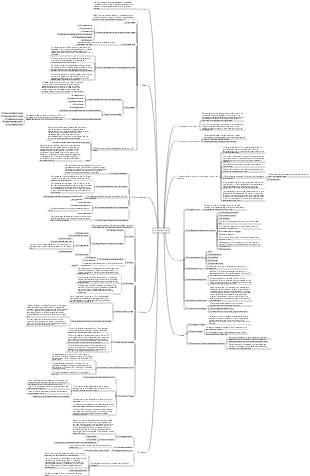
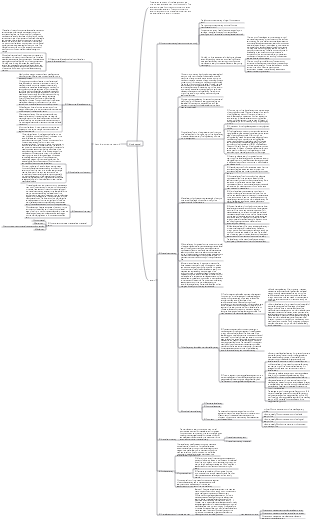
Oral Anatomy and Physiology Human Health Textbook 8th Edition mind map, including expression muscles, masticatory muscles, tongue muscles, etc. I hope it can be helpful to everyone.
Edited at 2023-12-04 10:32:56
- bacteria
This is a mind map about bacteria, and its main contents include: overview, morphology, types, structure, reproduction, distribution, application, and expansion. The summary is comprehensive and meticulous, suitable as review materials.
- Plant asexual reproduction
This is a mind map about plant asexual reproduction, and its main contents include: concept, spore reproduction, vegetative reproduction, tissue culture, and buds. The summary is comprehensive and meticulous, suitable as review materials.
- Reproductive development of animals
This is a mind map about the reproductive development of animals, and its main contents include: insects, frogs, birds, sexual reproduction, and asexual reproduction. The summary is comprehensive and meticulous, suitable as review materials.
Medicine-muscle mind map
- bacteria
This is a mind map about bacteria, and its main contents include: overview, morphology, types, structure, reproduction, distribution, application, and expansion. The summary is comprehensive and meticulous, suitable as review materials.
- Plant asexual reproduction
This is a mind map about plant asexual reproduction, and its main contents include: concept, spore reproduction, vegetative reproduction, tissue culture, and buds. The summary is comprehensive and meticulous, suitable as review materials.
- Reproductive development of animals
This is a mind map about the reproductive development of animals, and its main contents include: insects, frogs, birds, sexual reproduction, and asexual reproduction. The summary is comprehensive and meticulous, suitable as review materials.
- Recommended to you
- Outline
muscle
Expression muscles
Cranial parietal muscles (occipitofrontal muscles, temporoparietal muscles, galea aponeurosis)
1. Occipitofrontalis muscle: This muscle has no bony attachment points. It originates from the outer 2/3 of the superior nuchal line of the occipital bone and the base of the mastoid process of the temporal bone, and ends at the galea aponeurosis. Its muscle belly is divided into two parts, front and back, called the frontal belly and occipital belly respectively. The digastric muscles are connected by the galea aponeurosis. The frontal belly, also known as the frontalis muscle, originates from the galea aponeurosis, and its muscle fibers run forward and downward to the superficial fascia at the eyebrow arch.
2. Temporoparietal muscle: It is located between the frontal belly of the frontalis muscle and the preauricular and supraauricular muscles. It is a thin muscle sheet with unstable development. This muscle originates near the supraauricularis muscle and inserts into the galea aponeurosis.
Muscles around the ear (supraauricular muscles, preauricular muscles, postauricular muscles)
Located around the auricle, it includes the preauricular, supraauricular, and postauricular muscles, which are degenerated muscles in humans.
Muscles around the eyes (orbicularis oculi, corrugator supercilii)
1. Orbicularis oculi muscle: Its main function is to protect the eyeball. It is divided into three parts: circular muscle, orbital part, palpebral part and tear part.
2. Corrugator supercilii muscle: Between the eyebrow arches on both sides, it starts from the frontal bone and nose, and the muscle fibers run upward and outward obliquely to end on the eyebrow skin.
Nasal muscles
Including: depressor glabella muscle, nasal muscle, depressor septum muscle
Lip and cheek muscles
Lip muscles (one smile, two cheekbones, three lifts)
Upper group:
1. Smiley muscle: originates from the parotid masseter fascia and the skin near the nasolabial fold. Its main function is to pull the corners of the mouth backward and outward to show a smiling face.
2. Zygomaticus major: It is in the shape of a band. It originates from the front of the zygomaticotemporal suture of the zygomatic bone. The muscle bundle goes obliquely medially and downward, ending at the skin and buccal mucosa of the corner of the mouth. Main function: Pull the corners of the mouth upward when laughing to make the face smile.
3. Zygomaticus minor: It originates from behind the zygomaticomaxillary suture of the zygomatic bone. The muscle fibers run in parallel with the zygomaticus major muscle inward and downward, and insert under the skin on the inner corner of the mouth and the outer side of the upper lip.
4. Levator labii superioris muscle: approximately rectangular. The origin of this muscle is divided into two parts: the medial part originates from the lower part of the frontal process of the maxilla, near the upper edge of the flat piriform foramen; the lateral part is wider, originating from the infraorbital edge to the infraorbital foramen. between parts.
5. Levator labia alarus muscle: Originates from: frontal process of maxilla and infraorbital rim, ends at: greater nasal cartilage and surrounding subcutaneous, lateral bundle extends to the lateral part of the upper lip, main function: pulling the nose upward.
6. Levator anguli oris muscle: originates from the canine fossa of the maxilla and ends under the skin of the corner of the mouth, where it merges with the zygomaticus major and depressor anguli oris muscles and participates in the formation of the orbicularis oris muscle. Main function: Pull the corner of the mouth upward.
Next group:
1.Depressor anguli oris muscle: It starts from the outer oblique line of the mandible, goes inward and upward, and gradually concentrates on the corner of the mouth, and some fibers terminate in the skin of the corner of the mouth. Contraction of the depressor anguli oris muscle can cause the corners of the mouth to droop, expressing sadness, dissatisfaction and anger.
2. The depressor labii inferioris muscle: starts from the outer oblique line between the mental foramen of the mandible and the mental tubercle, runs upward and inward, merges with the muscle of the same name on the opposite side and the orbicularis oris muscle, and ends at the skin and mucosa of the lower lip and chin. Contraction of this muscle can express expressions such as sarcasm, sadness, melancholy, and surprise.
3. Mentalis muscle: Originates from the alveolar process bone surface at the root apex of the lateral incisors and central incisors of the mandible, gradually widens inward and downward, close to the contralateral mentalis muscle, and ends under the skin of the chin. Contraction of this muscle can lift the lower lip, chin skin and the mental labial groove, causing wrinkles in the chin skin; it can extend and evert the lower lip forward to express expressions of suspicion and contempt.
Ring group
1. Orbicularis oris muscle: Some of the muscle fibers originate from the mandible and the incisor fossa of the mandible, and some originate from the mucosa and skin near the corner of the mouth. Some of the muscle fibers are fibers of the buccal muscle, incisor muscle, mentalis muscle, and depressor angius oris muscle. continue. Main functions: Close the lips, seal the mouth, and perform actions such as mouth pressing and whistling; participate in sucking, eating, chewing and pronunciation
2. Incisor muscle: It is an accessory muscle of the orbicularis oris complex and is divided into maxillary incisor muscle and mandibular incisor muscle. When the incisor muscles contract, they can pull the corners of the mouth inward. This muscle is sometimes absent.
buccinator muscle
This muscle originates from the outer surface of the alveolar process of the third molar of the maxilla and mandible and the pterygomandibular seam. The muscle fibers from each starting point converge towards the corner of the mouth and terminate at the corner of the mouth. Its main function is to pull the corner of the mouth backward and make the cheek close to the teeth and gums. , helps with chewing and sucking.
Masticatory muscles
temporalis muscle
Originates from: the entire temporal fossa (from the superior temporal line above to the infratemporal crest below)
Inserts on: medial surface, apex, anterior and posterior edges of the coracoid process, and the anterior edge of the mandibular ramus, to the distal part of the third molar.
Main function: Lift the mandible, generate bite force, and maintain mandibular posture
Masseter muscle
Divided into three layers, in a quadrilateral shape, the shallow layer is the largest
The superficial layer originates from: the maxillary process of the zygomatic bone and the anterior 2/3 of the lower edge of the zygomatic arch, and its fibers run backward and downward
The superficial layer ends at: the masseter tuberosity of the mandibular angle and the lower posterior aspect of the lateral surface of the mandibular ramus
The deep layer originates from: deep surface of the zygomatic arch
Deep end: upper part of mandibular ramus and coracoid process
Acts the same as the temporalis muscle
medial pterygoid muscle
Located on the medial surface of the infratemporal fossa and mandibular ramus, it is deep and has a quadrilateral shape with two heads, deep and shallow.
The deep head originates from: the inner surface of the lateral pterygoid plate and the cone process of the palatine bone
Superficial head originates from: cone process of palatine bone and maxillary tubercle
Inserted at: pterygoid tuberosity on the inner surface of the mandibular angle
Main function: Lift the mandible and assist mandibular protrusion and lateral movement.
lateral pterygoid muscle
It is located in the infratemporal fossa, mainly above the internal pterygoid muscle, and is triangular in shape with upper and lower heads. The upper head is smaller and originates from: the inferior temporal and infratemporal crest of the greater wing of the sphenoid bone; the lower head is larger and originates from: the lateral surface of the lateral plate of the wing.
Insertion: A small part of the muscle fibers of the upper head insert into the anterior inner surface of the joint capsule and the front edge of the articular disc of the temporomandibular joint. Most of the muscle fibers of the upper head and most of the muscle fibers of the lower head insert into the articular pterygoid fossa at the neck of the condyle.
Main function: Draw the condyle and articular disc forward and downward. Stabilizes and coordinates the disc-condylar complex during jaw opening and closing. The lateral pterygoid muscle is innervated by the lateral pterygoid nerve of the mandibular nerve.
Applied anatomy of masticatory muscles
Displacement of masticatory muscles and mandibular fractures
For example, if there is a complete fracture in the unilateral mental foramen area, the short fracture segment behind the mental foramen area will be traction by the jaw-closing muscles on the affected side and will be displaced forward, superior, and medial; for a long fracture in front of the mental foramen area, the affected side will be mainly affected. Most of the jaw-opening muscles and the jaw-opening and closing muscles on the healthy side are traction, so they are displaced downward and toward the affected side, so that they overlap on the outside of the short fracture segment.
tongue muscle
Glossary muscles: A group of muscles that make up the parenchyma of the tongue and have the function of moving the tongue. Divided into internal and external tongue muscles (genioglossus, hyoglossus, styloglossus, palatoglossus)
Those muscle fibers that originate and end in the tongue are called internal tongue muscles. The muscles that originate from some parts outside the tongue and end inside the tongue are called extralingual muscles.
The tongue muscles are a symmetrical muscle group in the tongue.
Intrinsic tongue muscles
Including: superior longitudinal muscle of tongue, inferior longitudinal muscle of tongue, transverse tongue muscle, vertical tongue muscle
external tongue muscle
1. Genioglossus muscle: its origin is near the front of the tongue
2. Hyoidoglossus muscle: originates from the front of the body of the hyoid bone and the entire length of the greater angle of the hyoid bone, and ends at the side of the tongue.
3. Styloglossus: The smallest and shortest of the three muscles originating from the styloid process.
4. Palatoglossus: Except for the palatoglossus, which is innervated by the vagus nerve, all tongue muscles are innervated by the hypoglossal nerve.
palatopharyngeal muscles
palatine muscles
1. Tensor veli palatini: Located on the medial plate of the pterygoid process, it is a pair of triangular thin muscles. Most of the muscle fibers originate from the lateral wall of the Eustachian tube cartilage and the Eustachian tube membrane, and the rest originate from the base of the medial pterygoid muscle. Inserting at: posterior edge of bony hard palate Main function: tightening soft palate
2. Levator veli palatini: originates from the anteromedial aspect of the carotid canal below the petrous part of the temporal bone and inserts at the back of the palatine aponeurosis. Its main function is to lift the soft palate and narrow the Eustachian tube lumen and pharyngeal opening. This muscle is one of the most important muscles in completing velopharyngeal closure.
3. Palatoglossus muscle: originates from: palatine aponeurosis and inserts into: tongue parenchyma and transversus tongue muscle.
4. Palatopharyngeal muscle: This muscle is composed of two bundles of muscle fibers, both originating from the back of the palatine aponeurosis. The anterior muscle bundle originates from the posterior edge of the hard palate and the palatine aponeurosis, and some fibers cross the midline. Insertion: The posterior edge of the thyroid cartilage partially inserts into the lateral wall of the pharynx and is attached to the pharyngeal base fascia. Can help lift the pharynx and larynx
5. Uvularis muscle: Also known as the uvula muscle, it originates from the postnasal ridge of the palatine bone and the palatine aponeurosis and ends under the mucosa of the tip of the palatal uvula. Assists the levator veli palatini muscle to close the velopharynx.
Except for the tensor veli palatini, which is innervated by motor fibers from the trigeminal nerve, the other palatine muscles are innervated by the cranial root of the accessory nerve via the pharyngeal branch of the vagus nerve.
Pharyngeal muscles (superior pharyngeal constrictor, middle pharyngeal constrictor, inferior pharyngeal constrictor, cervicopharyngeal muscle, palatopharyngeal muscle, Eustachian tube pharyngeal muscle)
1. Superior pharyngeal constrictor: a slightly square thin plate-shaped flat muscle, which is the thinnest of the three constrictors. This muscle originates from: the pterygoid hook, the pterygomandibular suture, the posterior end of the mylohyoid line and the lateral edge of the base of the tongue, and inserts at the median pharyngeal suture, which is partially attached to the pharyngeal tubercle at the base of the occipital bone.
2. Middle pharyngeal constrictor: fan-shaped, originating from the greater and lesser angles of the hyoid bone and the lower part of the stylohyoid ligament. It ends at the median suture of the pharynx.
3. Pharyngeal constrictor muscle: It is the thickest of the three opposing pharyngeal constrictor muscles. Originates from: the posterolateral edge of the cricoid cartilage and the cartilage surface posterior to the oblique line and line of the thyroid cartilage.
The three pairs of pharyngeal constrictor muscles are arranged in an imbricated pattern from bottom to top.
4. Stylopharyngeal muscle: a long and slender muscle with a cylindrical upper part. It originates from the inside of the base of the styloid process and inserts into the upper edge of the middle pharyngeal constrictor muscle and the posterior pharyngeal wall area. Main function: lift the pharynx and shorten the pharyngeal cavity.
5. Palatopharyngeal muscle
6. Eustachian tube Pharyngeal muscle: originates from the lower part of the Eustachian tube cartilage around the pharyngeal opening of the Eustachian tube, and ends at: the pharyngeal wall
The pharyngeal muscles are mainly innervated by the pharyngeal branch of the vagus nerve, but the stylopharyngeal muscles are innervated by the glossopharyngeal nerve.
neck muscles
Function: Move the head and neck and maintain the posture and position of the head and neck.
Divided into: superficial cervical muscles, suprahyoid and inferior muscles, deep cervical muscles
superficial neck muscles
1. Platysma: The lower edge originates from the pectoralis major and deltoid fascia and ends on the face. The anterior part starts from the median symphysis of the mandible and ends at the lower edge of the mandible. The middle part is attached to the lower edge of the mandible or crosses the lower edge of the mandible, goes up and inward deep to the depressor angio oris muscle, and ends at the lateral half of the lower lip. Main function: Help lower the jaw and make oblique wrinkles appear on the neck skin. The attachment structure at the corners of the mouth can pull the corners of the mouth and lower lip downward to help express expressions of fright and surprise. Innervated by the cervical branch of the facial nerve.
2. Sternocleidomastoid muscle: The lower end has two heads, namely the medial sternal head and the lateral clavicular head. The sternal head originates from the upper part in front of the manubrium, and the clavicular head originates from the sternal end of the clavicle. Main function: Maintain the correct posture of the head. The sternocleidomastoid muscle is innervated by the accessory nerve and also receives innervation from the anterior branches of the 2nd and 3rd cervical nerves. This branch of the cervical nerve is generally considered the proprioceptive branch. Anterior cervical triangle Posterior cervical triangle External carotid artery Common carotid artery Internal jugular vein The vagus nerve and accessory nerve pass through. Therefore, in clinical operations, the sternocleidomastoid muscle can be used as a marker to find and avoid the loss of the above important structures.
Suprahyoid muscle group
Suprahyoid muscles:
Infrahyoid muscles
Deep cervical muscles
prevertebral muscles
Lateral spinal muscles
stomatognathic system muscle chain
1. Horizontal muscle chain: It is composed of a group of muscles arranged horizontally and connected in a ring. Functional characteristics: It can act as a perioral sphincter. It and the tongue muscle form a pair of mutually antagonistic and balanced muscle groups, affecting the formation of the entire dental arch and 𬌗.
2. Vertical muscle chain: It is composed of a group of muscles arranged vertically connected almost longitudinally from top to bottom. The upper part lifts the soft palate, and the lower part lowers the soft palate. The soft palate is similar to a valve in the pharyngeal cavity and performs pronunciation and swallowing functions.
3. Postural muscle chain: It is composed of multiple groups of muscles connecting the head and neck.